
It’s important to comprehend the advantages of keyword domain names, and exactly how important outfitting that force is to you SEO promoting system. Domain names are important. They sway the measure of traffic you get to your site, by assuming a significant job in where your sites rank in web search tools. Keen speculators rushed to purchase up all the single word, classification characterizing domain names which high organizations have paid enormous wholes of cash to gain the best space names for their organizations.
There is slight misinterpretation that claiming a single word domains are important, yet most don’t understand that two word or even three word keyword space names can be progressively viable. Truth be told, these “long tail keywords” can be significantly progressively ground-breaking since they are increasingly explicit.
What Are The Benefits of Keyword Domain Names
Accomplishing match keyword domain names have numerous advantages. They are pre-qualified, directed leads with no SEO and with no web rankings. Individuals despite everything type their pursuit terms into their program, and a portion of those individuals will type their hunt with a .com or .com.au into their program.
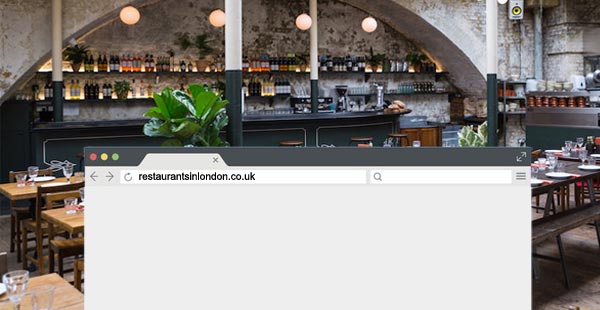
One model is instead of going to Google and looking for “cafés in London” a few people would basically type in restaurantsinlondon.co.uk into their program first, to perceive what comes up, and the eatery proprietor who had enough knowledge to purchase that domain name gets the advantages, while other eatery proprietors can just wish to come up in the hunt rankings.
A second advantage of keyword space names is it builds your natural inquiry traffic. One of the numerous viewpoints in the calculations of a fundamental web search tools like Google is simply the domain name. Precise match keyword domain names are blessed to receive be the most huge, and thus, locales with keyword domains normally will rank higher than sites without keyword domains. The Search Engine Ranking Factors report for 2010 positioned keyword utilizes in the root domain name as the third most noteworthy positioning components for on-page SEO advancement.
A third advantage of keyword space names is expanding your navigate rates. Clients are bound to tap on your site on the off chance that they see the keyword space in the URL when compared to different domains that appear in the list items. Regardless of whether you are paying for Google Adwords, measurements show more individuals will tap on your site on the off chance that they see a keyword space in the URL.
A fourth key advantage of keyword domain names is building brand acknowledgment. Results have show for the most part customers partner nonexclusive keyword domains with advertise authority. You should possess the domain + administration domains for the entirety of your administrations/or items for each geological district you administration. By doing this, not exclusively will you gain the advantages, yet you will likewise obstruct your rivals from doing likewise.
Conventional keyword domains have numerous advantages and can be a significantly more financially savvy method of accomplishing pre-qualified leads for your business than the customary practices. You can keep your rivals from picking up influence over you by purchasing the domains for yourself. Consider nonexclusive keyword domains like virtual land, and you can possess all the best properties and make a virtual imposing business model.
Google is the most popular search engine for the most part of the world and within good reason. Their popularity can be attributed to creating a search engine that supplies the best search results, immediately. In order to fully understand Google’s success and popularity, it is important to familiarise yourself with search engines and how their optimisation has been rendered beneficial during the digital age. Below is an overview of the power of Google and why your SEO matters.
The way Google works is that every time you search, there are thousands – sometimes millions, of web pages that will redirect you to a source with helpful information. The way Google figures out which results to show starts long before you even type, and is guided by a function to provide the best information.
Even before you search, Google organises information about web pages in their Search index. The index is similar to a library, except it contains more information than any physical library in the entire world. In a fraction of a second, Google’s Search algorithms sort through hundreds of billions of web pages in their Search index to find the most relevant, and useful results for what you’re looking for.
To help you find what you’re looking for quickly, Google provides results in different useful formats. Information presents itself in different forms be as a map with directions, images, videos or stories.
While advertisers can pay to be displayed in clearly marked sections of the page, Google guarantees that no one can buy better placement in the search results. Google engineers spend every day testing and conducting hundreds of thousands of experiments annually, consequently resulting in thousands of improvements.
On the other hand, Search Engine Optimization (SEO), is defined as setting up your website and content to show up through online search results. Comparatively speaking, SEO enables you to reach people when they are actively searching out information related to your products and services, as opposed to other marketing tactics wherein you yourself have to reach out to your audience. The function of SEO is to help you improve your visibility within the organic or natural search results, not to be confused with the paid search results.
You will see that it isn’t enough to have a website without SEO because if you fail to optimise your website for search engines, you risk losing potential customers to your competitors because their websites appear higher in search engine results than yours. The way it works is when someone searches for information that relates to the products and services you offer, you want to show up. And of course, you want to show up prominently. Research shows that 60 percent of traffic from Google searches go to websites that appear in the first three search results.

It is the inherent function of websites to best catch qualified leads. Generally, the best way to achieve this is by letting your prospective clients know that you exist. Having your website to rank on Google is one of the many challenges all businesses face when promoting and marketing their services. Since businesses differ in almost every aspect, the solution to such isn’t at all black and white. It would heavily depend on your business objectives, budget and time constraints. However, messing it up would cost you a lot of money and time. Engaging in either an organic or Google Adwords would work wonders in ensuring such. However, it is important to understand the differences of organic SEO vs. Google Adwords to know which is a better option for you.
Organic Search Engine Optimisation (SEO)
The biggest advantage to having a strong organic SEO ranking is that organic ranking tends to be more trusted than advertised. It is a known fact that Google has been around long enough now for users to be wise to when they are being advertised to. And most users know that businesses at the top of Google AdWords are the wealthiest. Statistics suggest that a high organic ranking attracts 50 percent more click rates than the top AdWord listing.
As such, businesses that recognise higher organic rankings means increased trust which in turn equals increased revenue are prepared to pay big dollars to get their site to the top of the pile. This is where SEO agencies come into play. Since organic SEO takes effort, focus and a lot of patience, it is inevitable that once your site is established, it undoubtedly yields incredible long term results that help businesses grow based on merit and trust rather than depth of pockets.
Google AdWords
Paid online advertising comes in many forms and one of which is Google AdWords. They are after all the biggest and better known player. AdWords is a great way to elevate your listing to the top of the pile. Google AdWords charges on a Pay Per Click (PPC) basis. This means that when someone clicks on your ad, you’re charged. Popular search terms are more expensive to purchase than those that are less popular. The rate you are charged per click is dependent on your market and where you’d like to rank. A company paying $0.20/click will likely not rank above a company paying $0.30/click.
When starting a paid marketing campaign it’s important to understand what your customers are searching for when looking for your service. The biggest advantage of PPC is that you can control which terms your website will be listed for. This is especially helpful when you’re trying to determine which keyword term yields the best results. Using Google AdWord management tools, you can easily see which keywords are converting into site visitors.

Electronic commerce (E-commerce) industries depend on sales website for the purchase of their products and services. Several innovations in technology have caused these websites to improve in more ways than one and such improvements are deemed to increase sales and profit for these industries. Blogs are one these improvements. Adding one to your E-commerce website proved to incur additional benefits in the long run. Below are the top five reasons why your E-commerce website need to have blogs.
Blogs Drive Traffic to Websites
In the E-commerce sphere, the more visits your website has – the more chances of sale. That is why it is important to drive more traffic to your e-commerce website. And having a blog could do exactly that. Blogs add content to your website. Consequently, the more content you have – the greater the website will index. As it increases in indexing, more people will locate and visit your website. These people can be future customers who are likely to purchase your products if it suits their needs and preferences. You can also improve your sales by incorporating trending keywords to your blog content. Once you create more blog posts and replicate it through social media accounts, you create backlinks that leads to your website – thus boosting your search engine optimisation.
Blogs Frame Your Expertise
The trend nowadays with blogs is that they are written in a way that makes the certain e-commerce industry the expert in the business. They make use of topics which directly cater their target clients and consumers. As such, more people interested in these topics will visit their website, thus creating a possible demand for their products and services. These topics may range from helpful tips about their businesses, to latest news about their products and services. Of course, it is very important to include product and service information but always focus on content that will significantly help the prospective clients and customers.
Blogs Increases Customer Engagement
If you observe e-commerce websites, you can see that websites that contain only prices and product descriptions are declining in number. This is because more and more e-commerce industries are maximising their websites to create great interaction and rapport with their clients and customers. Once you are known for your great online presence, customer care and engagement, chances are more and more people will recommend you. And your existing clients will continue to patronise your products and services. Your blogs could contain testimonials, inspirational stories and relevant multimedia content in order to increase customer engagement
Blogs Make Important Announcements
Blogs are the best place to announce news and updates about your products and services. You could also incorporate Frequently Asked Questions, seasonal promotions, or anything new about your company you would like to share.
Blogs Increases Perceived Quality
Since more and more people will consume and patronise your products and services, your business will become more credible and relevant. Therefore your clients will be more confident with the quality of your products and services.

Google made their second Core Update of 2020 in the midst of the Coronavirus Pandemic. On May 4th they announced the update, calling it the ‘May 2020 Core Update’. The rollout will continue for up to two weeks from the release date. Google’s timing has bewildered many webmasters – considering that the crisis has been causing companies to close, plus the fact that there have been decreases in traffic and sales across many industries. Below is an overview of the new Google Core Update in May 2020 and what it is all about.
Timing and Criticism
The timing of the May 2020 Core Update has been criticised by some webmasters and SEOs. Sustaining online businesses in the middle of the pandemic is already challenge enough with the continuing severe restrictions worldwide. The current restrictions have led to a widespread decline in traffic and online sales for many businesses leaving many with an overall sense of uncertainly about the future. Criticism was shared via Twitter and in the Webmaster World Forum:
It has become a tradition for Google to announce major core updates – significant, broad adjustments to the search algorithms and systems – via Twitter. This time, the announcement of the rollout was communicated on May 4th, 2020. Announcements such as these are an attempt from Google to prevent algorithm update rumours getting out of control plus to announce the name of the update themselves. The names Google gives to core update releases are deliberately kept neutral, with the “May 2020 Core Update” as no exception.
Other Names from Webmasters
Taking inspiration from the current crisis and the blandness of this update name, webmasters and SEOs who clearly do not find Google’s official naming rules too creative have their own ideas:
– “Corona Update” or “Pandemic Update”: Timing the rollout in the midst of the pandemic inspires alternative naming suggestions in connection with the Coronavirus, making it sure to be memorable long into the future.
– “Force Update”: May 4th is International Star Wars Day and the same day that Google announced the Core Update. “May the Force – or Fourth – be With You”, and the good rankings, of course!
Changes
As per usual, Google has not revealed precise information about what has changed in the search algorithm or which industries or topics are a special focus of the Google Update. It also remains unclear whether there is a connection to the Coronavirus Pandemic and the changing search behaviour of Google users.
According to Google, the entire period of the rollout takes one to two weeks until all changes are live. Google often undertakes tweaks post-rollout – they commonly will make adjustments due to unintentional or undesirable ranking results.
Impact of the Google May 2020 Core Update
In the meantime, some webmasters and SEOs have reported on the effects of the Google Core Update. According to the signs so far, there are several industries and page types that can be expected to be affected by the changes. According to initial statements from the Webmaster World Forum and Twitter, there are changes in a wide range of industries – from recipes to tech, health or even finance. There are also some early signs crypto-currency content has been impacted according to Forbes in this article.
Several recipe website owners noticed significant traffic losses, with the main reason being the disappearance of URLs from the recipe carousel as well as the disappearance of rich snippets for recipe results. It could be the case that Google readjusted specifically for this segment, especially because search results for recipe topics contain a lot of additional information displayed as rich snippets, such as images, ratings, cooking time and other information. In addition, users suspect that content related to the pandemic will receive more attention from Google.

A website, much like a person, represents a unique identity over the internet. Each fresh content update or amount of change that you make on your “live” website plays a deciding role in its interaction with users and search engines. However, it plays a different role when it comes to static websites. When you frequently update your static website with fresh content, it acts as a source of new information by search engines for any user search query. Search engines will love you if you regularly update your website with fresh content. Below is the impact of adding fresh contents to your website’s search engine optimisation (SEO) performance.
Adding Fresh Content Allows Frequent Indexing
This does not mean that your website will have higher indexing with regular fresh content. But, if your content will be fresh more often and there will be more article postings and downloads on your website, search engines will index your site more frequently. With frequent indexing, your chances of getting higher indexing will automatically increase.
Adding Fresh Content Impacts Your Website’s Ranking
Each time you update your site with fresh content, the ranking of your website is impacted by the freshness of the added content. Therefore, frequent updates with fresh content on your website can also increase your chances of getting better ranking on search engines. Remember that updating plenty of new content is not the key. The key here is to update good quality content is critical for your website. Stuffing your website with plenty of content all at once can penalise your website.
Google Favours Adding Fresh Content
It is nothing new to say that Google is the most used search engine. Google has a huge impact on how websites are made and designed. Google has always loved the sites that keep on updating their site with fresh content. So you must update your website as often as possible.
Frequent changes, changes, however, do not mean that you keep on making unnecessary changes or posts at every hour of the day. You can update your site once a day or at least twice or thrice a week. Googlebot always looks for new or updated web pages and then indexes the fresh content on the Google search results. When your content is reliable and fresh, your chances of better Google ranking increase with each update.
Adding Fresh Content Results in More Keyword Usage
Fresh content means more usage of keywords on your website. The Google search engine algorithms for indexing and rank boosts give priority to keywords. Fresh content in blogs or articles gives more opportunities to optimize your website to attract visitors. But your whole search engine optimisation (SEO) activities cannot be dependent on keywords completely. Your content must have your keywords bt should be placed naturally in your content. There should be no keyword stuffing. You can write fresh content that answers a question, explains how to do something or provides information on something they want.
Adding Fresh Content Improves Online Authority
Every website owner wants to become a top authority in his niche for Google. The best SEO tactics for this can be to understand that “content is king”. Add informative, valuable content on your website related to your industry and your website will enjoy greater authority potential.

Like any other search engine optimisation (SEO) technique, header tags are effective and their proper use has a great impact on-site rank. No one can negate the performance and impact of head tags on SEO and users. These tags make the content more appealing to users, and the search engines understand it better. Headers are also a place for keywords and sub-keywords to play a key role in SEO. If you are not exactly familiar with the concept of SEO, we recommend reading the comprehensive SEO story. If you want to become a professional, you should not overlook the power of headings. Below is an overview of header tags and their impact on SEO.
Header Tags Basics
Header tags, as the name implies, are in fact titles of textual content. The most important of these is the H1 header tag and it is used as the main headline of a post. Header tags have hierarchies H1 to H6. In general, there are two ways to structure a site’s content using header tags. The first and most common method is to create one H1 tag per page as header and possibly several H2 header tags and other subset tags in the text. In HTML version 5, each section starts with an H1 tag. This is designed to make it easy to combine several components into one page.
Header Tags Enhances Content Readability and Accessibility
The proper use of HTML header tags helps enhance the experience of your readers, improves your content’s readability and accessibility, plus it can even have an impact on your SEO. So, make sure to add HTML header tags to your content. As you can see from our blog, we use them all the time. However, remember to follow best practices for maximum effect.
Header Tags Create Structure
Header tags create structure in the content of an article’s text. Each header or header transmits information about the content of the following paragraphs to the user. A great way to understand headers is to compare them with a book’s table of contents: The H1 tag describes the overall position of the content, as the book title tells the viewer what the book is about. The H2 tags are, in fact, as the main headings of a book and describe the individual parts of a story. Other headers from H3 to H6 are other headings for the subsections of each section, such as a book whose main headings are divided into several sections.
Header Tags Can Block Text
Content that can be scanned at a glance is legible and has a high chance of being ranked in the top search results. Scanning a page with an eye is so important that a publisher like Forbes has identified this factor as the least underestimated factor in content marketing. The data collected to support this claim. Only 16 percent of Internet users read a text word for word. Other users only do eye-scanning.
Users love scanning content. According to the same study, what can be scanned by users is 58 percent more performance than similar content. In such circumstances, users will be more interested in reading the content rather than returning to the search results. As a result, they are more likely to share it with their friends. While social networks do not have a direct impact on site rankings, the more content you share, the more natural backlinks you will be able to get, and as you know, backlinks are one of the influential factors in ranking.

When starting an SEO campaign for your domain, there are some risks that you should be aware of. If you decide to redesign your existing website and alter the structure of your URL, you may risk losing your site’s current rankings. Yet if your existing site is now showing a loss in organic search rankings, you may benefit from risking the change to a fresh, new, holistic website design. This may result in significant increases in SEO.
Risks to Take and Some to Avoid When Starting Your Site’s SEO Campaign
Major risks that you can take and others to avoid as you begin your website’s new SEO campaign include the following:
Risks to Take
1. Meta Information from A/B Testing. Most SEO experts agree that your website’s click-through rates affect its search engine rankings. If web searchers are not clicking on your homepage, Google may omit this page from results for a search phrase. Your site may also lose listings if Google gives the keyword content and strategy in your meta titles and meta descriptions a low rating.
By performing A/B tests for different meta title and meta description pairs for your site pages, you can determine the strongest ones. If you optimize the pages of your website and evaluate the results, this can help to boost your page and overall site rankings significantly.
2. Altering URL Structure. Optimizing your website URLs and using keyword-compatible rather than inferior structure can result in higher search rankings. Having brief keyword-friendly URLs in subfolders can also improve your Google rankings considerably. Simplifying your URLs enables site users to determine the main focus of your page content in SERPs.
You should also 301-redirect your old URLs to their new web addresses to maintain the full link value of these older pages. Altering all of your URLs at the same time can damage your organic search rankings. For this reason, it is important to change them in increments, testing the results before making changes to the URLs of additional pages.
3. Enhancing User Experience. When you optimize your web pages for the ultimate user experience and examine the resulting metrics, you can determine the best SEO strategies for gaining high rankings in highly competitive Google terrain. You want to optimize any site pages showing low performance. You can calculate your site usability metrics, including on-page time, bounce rate and time spent on-site, from analysing current user experience.
To enhance user experience for your site pages, you can include product reviews, use video content as description content for categories and input product or category explanations where helpful. It can also be beneficial to remove unnecessary content from your category pages. As you progress with these additions and changes, continue measuring your usability metrics with Google Analytics.
4. Obtaining Top-Quality Backlinks. Quality backlinks are a major factor in attaining high Google SERPs rankings. There is really no need to be concerned about getting Google penalties from backlinks that are of high calibre. If you are not receiving good results from your existing site backlinks, Google may not be rating them as high-quality links. However, rather than overcrowding your website with a large quantity of new backlinks, focus on replacing the older, non-productive ones with top-calibre choices.
Risks to Avoid
1. Disallowing Low-Quality Backlinks. SEO experts often disclaim low-quality (or “neutral”) backlinks. Yet Google’s Penguin 4.0 update did away with website penalties for poor caliber backlinks. Since you are not always able to control what websites link to your own site, Google is currently ignoring backlinks in terms of penalties. In general, a good rule is to disavow only backlinks that your new customers and ongoing clients might object to if they visited these domains.
2. Deleting or Consolidating Site Pages. There is no need to delete content pages or URLs. If you do delete some site pages, remember that your website will no longer rank for the page-related keywords. If you need to maintain rankings for these key terms, keep the page. When deleting a product page, keep the URL and insert a message on the page informing site users that this product is no longer available.Refer them to other similar or related products on your site. When you consolidate web pages, ensure that the 301 for the old URL redirects correctly to the new URL. Also, be sure that the new page incorporates all keywords and phrases that your old site page ranked for.
If your website is not ranking well in SERPs, this may be for one or multiple reasons. Whether your site is newly designed and published or an older domain with dated content, its e-commerce success can suffer from low rankings on Google and other search engines. For many business site owners, it can take some time, research and website analysis to determine what issues are preventing their domains from gaining high visibility in web user searches.
Possible Reasons Why Your Website Is Not Attaining High Rankings
Although your website contains quality content that is engaging, current and detailed, it may still have low rankings for SERPs. Main reasons for your domain’s failure to rise in search page rankings may include the following:
1. Your Site Is Not Yet Indexed in Google. If your website is new, the Google bots may not have crawled your site yet. If you like, you can speed up this process by submitting your sitemap with the use of Google Webmaster Tools. It can also help to share your articles on a variety of social media sites.
You should also check your Reading settings. You may have de-indexed your website accidentally, which prevents search engines from indexing your site. You may also have constructed your website on a penalised domain or one that is already de-indexed expired. If so, you need to look at its history to tell if this is the problem.
2. Your Target Keywords Are Highly Competitive. It is often very tempting to choose target keywords with the highest levels of search volume for use on your site. Yet by selecting key terms that will bring your site a good rank that aligns with your existing site’s authority and your current SEO skills, budget and available time, you can improve your website’s search engine rankings significantly. Later on, you can incorporate more competitive keywords.
3. Your Site Lacks Sufficient High-Calibre Backlinks. Increasing the number of high-quality backlinks included in your website content is still an essential element for attaining top search engine rankings. By choosing valid editorial backlinks from authoritative sites that have significant relevance to your domain’s content, you can gain much better SERPs rankings. Once you have created a powerful backlink profile for your website, you will have an excellent chance of ranking quite well. You can also obtain some superior backlinks through such practices as guest posting and leaving blog comments on quality sites.
4. Your Domain Lacks Good SEO. To be updated for top-quality SEO in 2020, you should create your site with silo structuring. Siloing is a method of separating relevant groupings of content on your website into definite thematic sections, like chapters in a book.
This practice will bring you higher rankings for key terms while serving as a major cornerstone for top-rated SEO. You should also optimise all title tags and meta descriptions. Including strongly engaging content, embedding rich media and creating a fast-loading site will also improve your domain’s SEO results. Using an on-page SEO checklist is also extremely beneficial.
5. Your Site Does Not Offer a Good User Experience. Creating an excellent user experience for your website is the most effective step to raising your search engine rankings. Google and all other major search engines consider providing a top-quality user experience as the ultimate goal for any successful site designer today.
To determine the quality of your current site visitors’ ease of web page use and overall onsite experience, you can measure your domain’s key SEO metrics. These include users’ onsite time as well as bounce and return user rates. If the results of these metrics are weak, you can work on improving relative site features and factors. Once your domain provides a top-quality user experience, you will see an impressive rise in your site’s SERPs rankings.
1300 638 949
enquiry@netwizardseo.com.au