
Whenever another website links to your site, this creates a backlink. According to Moz, a backlink expresses confidence in your site content. In general, search engines view backlinks as proof that your site content has value. When a large number of websites link back to your site, your content will most likely appear in search results.
This enhances your ranking for the subject matter that is linked to. Earning backlinks is an important aspect of off-site SEO. As your site gains more backlinks, this is referred to as “link building.” While the majority of backlinks are good and helpful for link building, some are especially good and others may be toxic. Gaining an excess of toxic backlinks can be harmful to your SEO ranking.
What Causes a Backlink to Be Toxic?
Several qualities and aspects of site linking can cause a backlink to be toxic or increase its degree of toxicity as viewed by a search engine, including the following:
Why Toxic Backlinks Can Cause Harm to Your Search Engine Ranking
According to Google, in some instances, inbound links can influence Google’s evaluation of a web page or website. You or a search engine optimiser that you are working with may have built bad links to your website using paid links or other types of link schemes that are not in compliance with Google’s quality guidelines. Google stresses the importance of removing as many poor-quality or spam-like links from the web as you possibly can.
Backlinks can cause harm to your search engine ranking for the following four major reasons:
Effective SEO is an ongoing process that takes time. It can be a rather long process to build your SERPs rankings, and no two websites will achieve equal levels of success at the same time. Your website’s SEO effectiveness depends on multiple factors, including keyword usage and your business type.
Free web searches and marketing online at no cost help companies of all sizes save money. A website with high rankings for SERPs can greatly increase its web traffic volumes. If a website’s SEO techniques and strategies align with the expectations of the major search engines, this site is highly likely to gain a high Google ranking.
Yet search engine algorithms and SEO practices are constantly being updated and changed. Even the most effective SEO practices can take time to bring high site rankings for SEO and greater site visitor numbers.
Key factors for achieving top-rated SEO for your website include quality keyword usage, and easily remembered domain name, your company and website location (and if appropriate, the language or languages used) and excellent quality, highly relevant website content.
Why It Can Take a Long Time to Achieve Organic SEO and Search Engine Success
Reasons why achieving organic SEO and search engine success for your website can take a long time include the following:
Huge Volumes of Competition Exist. Strong competition from other websites has a significant effect on the time required for your site to attain high SEO rankings. However, many website owners may be less experienced with using SEO strategies than you are. Of course, others most likely have greater experience than you.
Speed Is Not Always an Advantage. It is possible to manipulate sites to enhance SEO rankings. Yet these same websites may suddenly drop in ranking. Sites that attain moderate notice and popularity over a length of time are usually better trusted and gain higher consistent rankings.
It is good to remember as well that search engines are often suspicious of sites that rocket to high levels of visibility and success. Although you may feel somewhat discouraged when you first see high SEO rankings for these websites, they may soon drop drastically in degrees of credibility and levels of SEO ranking for SERPs.
Technology Changes Constantly. Just like technology as a whole, search engines are changing constantly. This can also increase the time required for SEO strategies and techniques to be effective and show results. When periodic changes are made in the manner in which search engines operate, site rankings can change rapidly.
Money Has Influence. The greater amount of money that a company has for advertising and marketing, the stronger its web presence and credibility will be. Companies with more money available for promotion can often attain their marketing goals more quickly and easily. Consistent quality marketing can have a strong positive impact on the company website’s SEO success.
Yet there are myriad ways to market your company site cost-free like marketing on free social media platforms. By working on improving your website content, navigation and general user experience, you can also improve your SERPs rankings significantly.
The acronym, NAP, stands for name, address and phone number, and the NAP for your business should stay consistent across the web. E-A-T represents expertise, authority and trustworthiness. Your goal should be to exhibit these qualities to the ultimate level for your industry. This is essential for building a loyal customer base and for ranking high in Google SERPs.
Online business listings are an important element of your company’s digital marketing strategy. Since these listings are backlinks, they can strengthen your website’s authority and credibility with search engines and searchers. A backlink is similar to an endorsement from another site, which Google and other search engines value. Just remember that all of your endorsements should have the same identifying information about your business.
NAP inconsistencies relative to your business can have adverse effects on your local SEO. This is because search engines will not have confidence in the information that you are providing. Google’s highest standards for evaluating the NAP provided for your business are based on the superior quality information given for professional websites that have an effect on an individual’s financial, health or professional decisions and actions. To reach and maintain this high standard, you must consistently display accurate NAP data for your company.
It is essential to exhibit E-A-T to your business target market and customer base. One very important aspect of successfully doing this is to ensure that there are no inconsistencies in your NAP. These inconsistencies may prevent potential customers and even loyal clients from reaching you about an important business matter.
First of all, to ensure NAP consistency for your business, your business name must appear exactly the same across the web. To help maintain your company’s NAP consistency, ask yourself the following questions:
If your business is a limited liability entity, do you want to consistently include “LLC” as part of your company name?
Does your company name include the word “and” or an ampersand? If so, choose one or the other and use it consistently.
Does your company name contain commas? If so, either leave them in or omit them consistently.
Does your business address include a suite number? If it does, spell out the word “Suite” rather than abbreviating it each time you use or provide your address.
If you use consistent NAP data across the web, search engines are inclined to reward you with higher ratings for SERPs. In addition, your current clients will appreciate this consistency, ad potential customers will enjoy a positive introduction and first-time experience with your company.
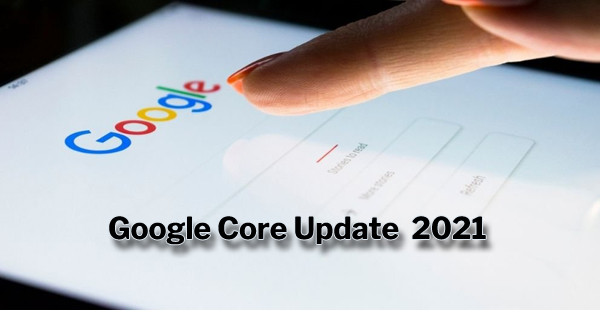
Google began rolling out the July 2021 core update on July 1, approximately one month after the June 2021 core update rollout. A major difference between the two was that the June 2021 core update required more time to roll out and have influence.
Yet significant effects of the July 2021 core update were evident almost immediately. A site hit by either one of these updates could experience a major impact on its Google organic traffic. Data experts who track Google search results tend to agree that although the July update had an immediate impact, the June update was actually bigger.
Major Facts Concerning the Latest Google Core Updates
Primary facts about the Google July 2021 core update and other previous updates include the following:
Statements from Data Providers on the July 2021 Update
Statements released by data providers pertaining to the Google July 2021 core update are as follows:
From Semrush:
Semrush stated that the July 2021 core update was unique because it lacked any displays of prolonged time periods of intense rank fluctuations. Yet, in contrast to the June 2021 update, the July update did not show signs of a lag between Google’s announcement and the effect on rankings. Semrush’s sensor tool indicated a 9.4 spike the day following the update’s announcement.
Semrush reports that the June 2021 core update exhibited notably higher increases in rank volatility. These increases in rank volatility were approximately 42 percent more dramatic than the results of data that the company tracked at the onset of the July 2021 update.
From RankRanger:
RankRanger stated that the July core update, like the June update, was a major update when compared to the December 2020 update. They reported that based on the data available, the June 2021 core update could be determined to be larger than the July 2021 update by simply comparing their charts.
The SEO community offered feedback within 12 to 24 hours after the onset of the July 2021 core update rollout. All agree that it had rapid and big-scale effects.

As a qualitative measure, authority determines web properties that have a notable effect on each site content property’s comprehensive visibility, credibility and ranking in search engines. The majority of SEO strategies and techniques are designed to improve authority. These techniques and strategies include such tactics as creating valuable and engaging content and skilful link building.
There are a variety of measures of direct and indirect authority within the categories of domain authority and page authority. Ways in which you can improve your site’s domain authority and page authority include the following:
Top-Quality Content. Create plenty of high-quality content on your site that includes a tight internal linking network.
Top-Quality Inbound Links. Focus on gaining an abundance of high-quality inbound links pointing to the various pages of your website. The quality of these links can be based on the external source authority and their degree of relevance to your site content.
Bad Links. Remove all bad links that point to your website pages. Replace them with good-quality, relevant links.
Time Allowance. Allow adequate time for improving your domain authority. It will increase slowly and steadily over time, according to the site updates that you have made.
Once you obtain improved domain authority, all of your web pages, including subdomains, will have a greater likelihood of ranking high for all relevant searches.
High-Authority Domain Pages. Ensure that your domain has high authority before you create new pages. This will give the pages an excellent foundation for making them high-authority pages.
Superior-Quality Page Content. Make sure that the content that you input on each page of your website has superior detail, originality and relevance.
Functional Optimised Pages. Ensure that each page of your site is totally functional with optimal quality search engine optimisation.
Internal Linking. Be sure to include quality internal linking to and from each page of your domain.
Top-Quality Inbound Links. Gain an abundance of top-quality inbound links in terms of both link relevance and the authority of the external source.
Bad Links. Remove all bad links that point to the pages of your domain.
There is a mutually supportive relationship between domain authority and page authority in terms of the benefits that they both can bring to your website. As you build a greater number of links to your site pages, this will increase your domain authority. When you improve your domain authority, this will increase the page authority of your entire website.
Since page authority can increase faster than domain authority, it can help you improve your search engine rankings for a specific page of your site. Yet improving your domain authority brings better long-term results. Over time, better domain authority will attract more inbound traffic to your domain. This is because it increases the potential for ranking higher in web searches for all of the pages of your domain at once.

With optimal quality visibility on social media, your website SEO gains a significant positive impact. Your web traffic volumes increase impressively, and your product sales conversion rates take a sharp leap upward.
Social media sites have powerful search engine functions that give them the capacity to operate like search engines. Many users have no doubt optimised their social profiles and posts with keywords that you may be entering in searches. This makes social media a major factor in strengthening and empowering your website’s SEO.
The Strong Impact of Social Media Visibility on Your Website’s SEO Results
High levels of visibility on major social media sites have a strong positive impact on your website’s SEO results. Excellent social site visibility has powerful SEO influence in the following ways:
Social Media Sites Drive Top-Quality Web Traffic. The primary reason that social media is vital for boosting SEO is that social sites have an indirect impact on the factors that influence search ranking. Social media can drive top-quality web traffic to your website.
Social Media Is Linked to SEO. Although social media is not a search engine ranking factor or criteria, it is linked to SEO. Social media and SEO are connected via social signals that fortify the factors that Google uses for ranking websites. By mass sharing content on various social sites, you can collect large numbers of these signals.
Social Media Content Drives Web Traffic. Your social media postings are also a key way to attract more visitors and potential customers to your website. Your content may include virtually any format so long as it engages and captures your audience. These formats may include blog posts, videos, infographics and podcasts. All formats drive web traffic to your site while boosting large-volume shares of your content.
Influence of Different Social Media Site Visibility on Website SEO
Examples of how different major social media website visibility impacts your website SEO includes the following:
LinkedIn. The social media site of LinkedIn is currently the top-rated social site for lead generation. Today, this site is the centre of content marketing for nearly 95 percent of all B2B marketers. In addition, nearly 90 percent of all online marketers use the LinkedIn platform for generating leads.
During this process, your content gets large-volume shares, and your profile is frequently viewed. As a result, your website gains increasing numbers of interested visitors.
Facebook. Around the globe, Facebook is accepted as the leading social media platform. In May 2021, Facebook scored nearly 26 billion visits. Since this social media giant makes it easy to share content and post many types of material, it offers ongoing wide exposure.
When you post links to your website and blog content, you are distributing it to countless numbers of viewers instantaneously. Since Google crawls and indexes posted links on Facebook, you are also benefiting from an excellent SEO strategy free of charge.
Facebook pages appear frequently in SERPS, and Facebook reviews often show up in Google knowledge boxes. Needless to say, this major social site is a goldmine for boosting your website SEO.
Innovative use of these and other leading social media websites for boosting your website SEO can improve your search engine rankings impressively. However, you need to ensure that your profiles and posted content on these sites comply with the guidelines of each platform for optimisation.

Search engine optimisation is essential for business success today. As a cornerstone of digital marketing, high-quality SEO is destined to remain a major player in promoting good business as long as online search engines power our information banks. Non-organic SEO trends such as Google Ads and PPC campaigns as well as paid affiliate marketing tend to monopolise the spotlight. Yet organic SEO is also an essential player.
Five Important Reasons Why Your Website Has a Definite Need for Organic SEO
Five leading reasons why your website needs essential organic SEO include the following:
1. Saving Money While Focusing on Content. Ads and outbound marketing techniques are not nearly as effective as they once were. Delivering web content with authentic value at no price is the major marketing strategy today. While ads only deliver results if you keep paying for them, organic SEO methods work without involving money.
With the frequent use of ad-blocking technology today, many ad campaigns soon lose their effectiveness. Also, the majority of web users prefer organic search results. Although organic SEO is less costly than any type of paid campaign, it is not free.
For effective organic SEO results, you must pay for content creation, tech work and some promotions on social media. Yet organic SEO is a far less costly way to gain higher SERPs than paying your way up the ladder.
2. Being Adaptable to Google Algorithms. The Google Algorithm updates from 500 to 600 times per year. If you carefully track and navigate these updates using a variable SEO strategy, your brand can make gains over competitors that use a more inactive approach.
If you develop and follow a strongly adaptable organic SEO strategy, you can remain on the cutting edge indefinitely. Expert organic SEO strategists focus their vision on analytics with ears open to the industry activity to determine the shifts in the algorithm.
3. Forming Valuable Connections and Partnerships. Although you may return high numbers on PPC campaigns from time to time, connecting with leading influencers is far more valuable. Connecting with your primary publications and media outlets is also of great importance.
You may make these connections in various ways, like guest posting on a prominent blog or collaborating with social media influencers. You may also want to seek positive press from a valued news site. You should think of organic SEO as an effective investment in your brand’s credibility, reliability and authority across your industry and the web.
4. Getting Ready for Mobile and Voice Search Success. You need to position yourself well for mobile and voice search success. Today, over half of all Google searches are performed on smartphones. This is active proof that we now live in a mobile-first global environment.
Your web pages must be optimised for crawling and indexing for the mobile search world. Your digital web pages must load quickly and completely to satisfy your mobile viewers and Google.
5. Gaining Benefits from the Compounding Effect. Picture organic SEO as the slow building of a foundation for an ever-expanding huge building that continues to grow, gaining size and power. Once you begin to gain momentum, you will receive significantly greater volumes of traffic, leads, sales conversions and steady customers.
Google updates its algorithms with major changes several times each year while performing slight tweaks to certain additional evaluating factors as well. To have effective web content on your site with optimal quality SEO, your content must align with and support Google’s current mission and intent.
Comparison of Good and Bad SEO Web Content
When comparing good and bad SEO web content, you can benefit from heeding the following expert advice:
To achieve and maintain high SERPs rankings on Google, you need to avoid such bad SEO practices as the following:
1. Weak Quality Citations. Google views the other web pages that you link to in your web content. A reference link to a website with poor calibre content sends a red flag to the Google page crawler. When you site poor quality reference sources, your website can lose valuable credibility with Google.
2. Overly Long Content. When your web page content is excessively lengthy, you lose your site visitors’ interest. Studies have revealed that as website viewers skim down a page, they read and comprehend less content as they progress downward.
Their user experience on your website is significantly diminished. You may even lose new customers and current clients due to your long passages of content.
3. Too Few Headings. By inserting H2 and H3 headings every 300 words, you will help your readers’ eyes to focus on each new section of content more easily. Especially when you include major keywords in your content headings, you will catch Google’s approving “eye” as well.
4. Keyword Misuse. Be careful not to optimise too many keywords. You need your focus keyword and a few others, but an excess will bring disapproval from Google. Also, using your focus key term too many times in your content will repel both Google and your site content readers.
To attain higher Google rankings, you need to master such good SEO techniques as the following:
1. Perform Quality Keyword Research. When researching good keywords for your site content, incorporate synonyms and content connected to topics rather than singular terms. Include long-tail keywords not used by your leading competition.
2. Use Featured Snippets. The small boxes visible at the top of search results, or featured snippets, bring reader attention to the content that they represent. By using good quality featured snippets, you will automatically spread your message to a wider web audience.
3. Update Old Web Content. If your website contains old, outdated content, Google will designate it as “stale.” You need to replace or revise any older material that is no longer relevant or completely factual. Your site visitors will often recognize content that needs updating, leaving your web pages to view a competitor’s site.
4. Follow Quality Guidelines. By following quality guidelines like EAT (Expertise, Authoritativeness, Trustworthiness) and YMYL (Your Money or Your Life), you can gain higher SEO rankings. When you adhere to these guidelines, you will also create superior content for your site. In addition, you will avoid using content that might strongly affect a reader’s health, safety, wealth and ongoing happiness.
For effective online marketing today, website owners diversify, using essential features and tools like AdWords and the major social media platforms. When they get good SERPs results with the use of promotions and ads on Facebook, Twitter, Instagram, Pinterest and other sites, they wonder if good organic search results have lost their value.
Yet experienced web marketers report that organic search still outperforms traffic generators, driving between one-half and two-thirds of web traffic to both B2B and B2C business sites.
Five Reasons Why Organic Search is Still Better than Paid Search
Five major reasons why organic search still triumphs over paid search in driving greater volumes of web traffic to business sites include the following:
1. Organic Search Rates Top Performance. Organic searches still deliver higher rates of relevant web traffic to sites. Although some paid search ads may bring greater sales conversions, the total marketed audience volumes returned to sites by these ads is much less. For long-term, consistent results, the paid search produces far less overall targeted traffic for websites.
2. Superior Website SEO Supports Good Organic Search Results. If your website design includes top-quality SEO, like easy navigation, fast loading time, customer-oriented keyword use and excellent user experience, your organic search results should soar. With a reliable responsive site that is easily and fully accessed on all digital device screens, you should see optimal increases in relevant traffic. A quality virtual assistant to handle customer service is also a definite plus, leading to greater conversion numbers.
3. Social Media Ads Have Limitations for Organic Search Results. Although Facebook ads are designed to drive visitors to your site, they do not promote customer loyalty. While Twitter does encourage customer loyalty, it does not generate post traffic. Most Pinterest users cannot be wooed away from that site unless it is obvious that your website sells something that they want or need. While paid ads on social media do attract visitors to your site, they will not often bring these individuals back for a second visit. However, using good keywords and other organic SEO strategies in your online content both attracts new targeted site traffic and develops loyal customers.
4. Organic Search Visitors Have Lower Bounce Rates. General search results show that web users who access your business site through an organic search tend to linger on your site and explore its different pages. They are also more likely to make return visits than those who arrive via paid searches. Even if you currently gain more than half of your web traffic from Facebook, you will need to keep paying for Facebook ads to keep up this visitor rate.
5. Good Organic Search Strategies Keep Working for You. When your web content displays quality SEO techniques and strategies, it continues to work for you over time. The same tactics that brought you your early search results and customers will keep producing relevant visitors from the volume of SERPs that they enable your site to appear in. In addition, when web users view your site in multiple search results in their area of interest, they gain confidence in visiting your website, viewing your products or services and making purchases.
1300 638 949
enquiry@netwizardseo.com.au